

Tiny Treasures The Historical Significance of Seed Pearls
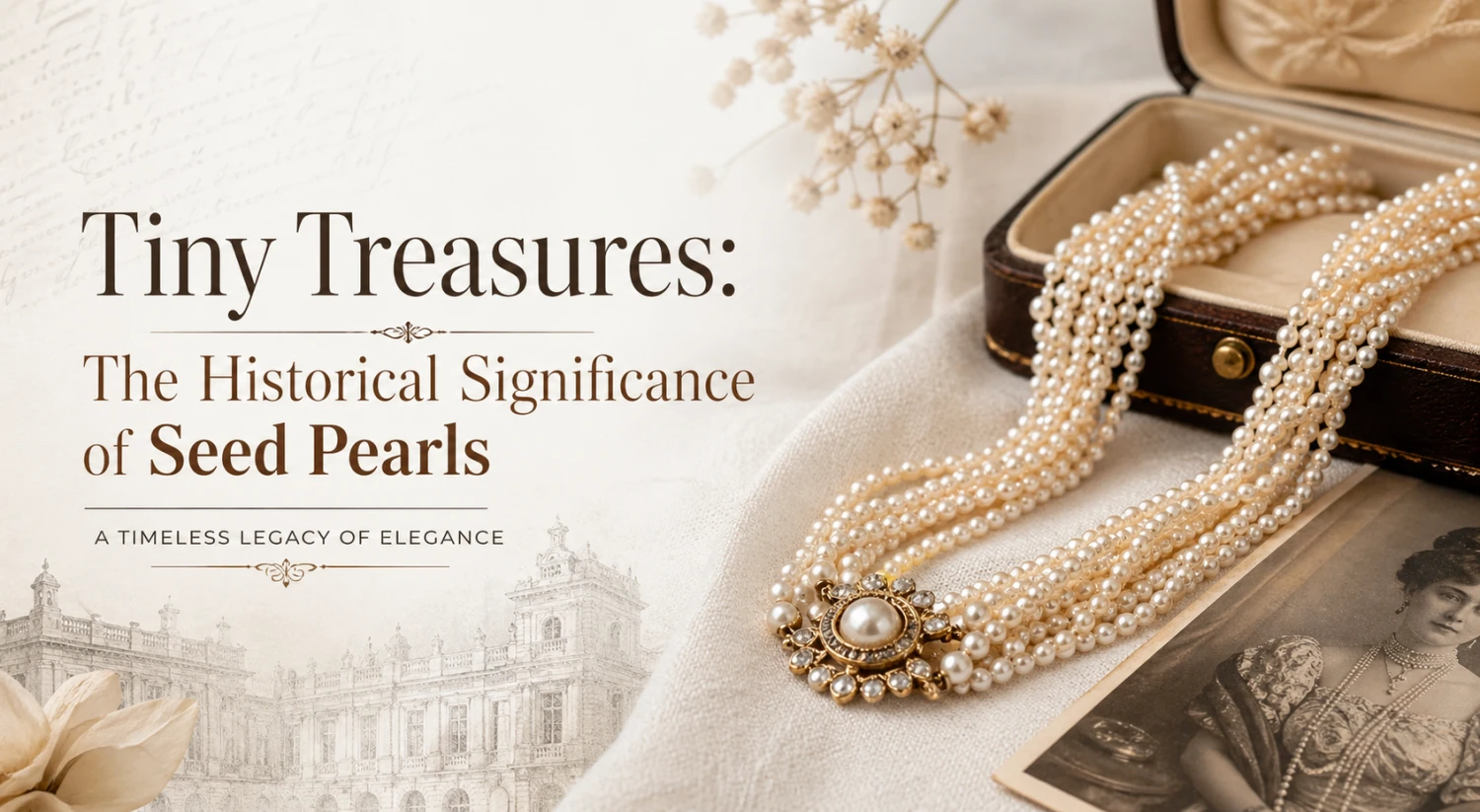
Tiny Treasures: The Historical Significance of Seed Pearls
There is a particular kind of magic that belongs only to the smallest things. A handwritten note tucked inside a locket. A single pressed flower between the pages of a century-old book. And then there are seed pearls those impossibly tiny, luminous orbs that, for centuries, were sewn by hand into some of the most breathtaking jewelry the world has ever seen.
At just under 2mm in diameter, a seed pearl is easy to overlook. But underestimate it, and you miss the whole story. These miniature gems shaped the course of jewelry history across multiple eras, adorned the necks and wrists of queens, comforted the grieving, celebrated the newly wed, and occupied the patient hands of craftspeople who worked for hours to place each pearl exactly so.
They were the accent stone of their age before diamonds claimed that throne and their legacy endures in every delicate antique piece that continues to captivate collectors and vintage jewelry enthusiasts across the United States today.
This is the story of seed pearls: where they came from, what they meant, and why, centuries later, they still matter.
What Are Seed Pearls? A Closer Look at Nature's Tiniest Gem
Before diving into history, it helps to understand exactly what a seed pearl is because even among pearl lovers, there is sometimes confusion.
Seed pearls are naturally formed pearls that measure less than 2mm in diameter. Their name is wonderfully literal: they look like tiny seeds, round or slightly off-round, typically creamy white or ivory in color, with the same subtle iridescence that makes all pearls so captivating. Historically, they were sometimes defined as pearls weighing less than a quarter of a grain a measurement that underscores just how minute they truly are.
Like all pearls, seed pearls are formed when a foreign particle a grain of sand, a parasite, a fragment of shell finds its way inside a mollusk. The oyster or mussel responds by coating the intruder with layer upon layer of nacre, a combination of calcium carbonate and a protein called conchiolin. Over time, those layers build into a pearl. The process is the same whether the resulting gem is the size of a marble or a poppy seed. What differs is the irritant, the species of mollusk, and the duration of the process.
Before the advent of cultured pearls in the early 20th century Kokichi Mikimoto successfully cultured the first pearl in Japan in 1893 every pearl in existence was wild and natural. Seed pearls were harvested by divers from the oyster beds of the Persian Gulf, the rivers and streams of Europe, and the freshwater mollusk populations of the United States. They were found in saltwater oysters and freshwater mussels alike. And while they were tiny, they were anything but worthless. In the hands of a skilled artisan, a single seed pearl was one small stroke in a breathtaking painting.
Today, seed pearls can emerge as unintentional byproducts during the cultivation of larger cultured pearls small gems formed around microbeads or accidental irritants in pearl farms. But the seed pearls that collectors and antique jewelry lovers prize most are the natural ones found in pre-20th century pieces: unplanned, unhurried, and entirely the work of nature.
Before the Victorians: A Gemstone of Royalty and Mythology
Long before the Victorian era made seed pearls a household accessory, these tiny pearls held a revered place in the courts and cultures of the ancient world.
In ancient civilizations stretching from Persia to Rome to India, pearls including the smallest specimens were considered among the most precious substances on earth. They adorned crowns, were sewn into royal garments, and decorated the jewelry of nobility and clergy. In ancient Rome, pearls were such a marker of status that Julius Caesar reportedly passed a law restricting their wear to the ruling classes.
Cleopatra famously dissolved one of her pearl earrings in vinegar and drank it to win a bet with Mark Antony about who could host the most extravagant banquet a story that, true or embellished, reveals the staggering value attached to pearls in the ancient world.
In the East, pearls were woven into the symbolism of religion and royalty alike. Indian maharajas adorned their turbans with cascading ropes of pearls. Persian poets wrote of them as frozen tears of the gods. In medieval Europe, pearls embellished the vestments of the Catholic Church and the crowns of kings.
Throughout all of this, seed pearls too small to be used alone but perfect as accents and in grouped formations played a quiet but essential role in the visual vocabulary of power and devotion.
What the Victorian era would do was democratize this visual language, bringing seed pearls out of the exclusive domain of royalty and into the homes and hearts of a growing, fashion-conscious middle class.
The Victorian Era (1837–1901): The Golden Age of Seed Pearl Jewelry
No period in jewelry history belongs more completely to seed pearls than the Victorian era. From approximately the 1830s through the end of the 19th century, these tiny gems were everywhere on brooches and bracelets, tiaras and lockets, mourning pins and bridal necklaces. Understanding why requires understanding the world that produced them.
A New Middle Class and Its Aspirations
The Victorian era in America and Britain saw the rapid rise of a prosperous middle class. Industrialization created new wealth, new social ambitions, and a new consumer appetite for goods that signaled taste and refinement. Jewelry was central to this aspiration. Diamonds were only beginning to become commercially available in large quantities South Africa's diamond fields wouldn't be discovered until 1867, and even then it would take decades for diamonds to become the ubiquitous accent stone they are today. Pearls, meanwhile, were understood by everyone to be the most precious and elegant of gems.
The challenge was that large, fine pearls were extraordinarily expensive far beyond the reach of the average middle-class consumer. Seed pearls changed that equation entirely. Harvested in abundance from freshwater mollusks in rivers across Europe and North America, and from the oyster beds of the Persian Gulf and Asia, these tiny pearls could be sorted, drilled, and incorporated into jewelry at a price point that made real pearl ownership possible for women who had never imagined it within their reach. For the first time, a seamstress or a shopkeeper's wife could own a genuine pearl piece. It was a quiet revolution.
Queen Victoria and the Mourning Jewelry Movement
No account of Victorian seed pearl jewelry would be complete without acknowledging the woman who shaped every facet of Victorian taste: Queen Victoria herself. When Prince Albert died in December 1861, the queen's grief was total and lifelong. She wore black for the remaining 40 years of her life. Her public appearances became fewer, her personal style more muted and sentimental. And her jewelry once spectacular became deeply symbolic.
Queen Victoria embraced mourning jewelry with a fervor that immediately set national and international fashion. Pieces crafted from jet, onyx, and black enamel became the appropriate accessories for a society that followed its queen's lead in matters of dress and decorum. And seed pearls became the natural, luminous counterpoint to those dark materials accenting onyx brooches, outlining black enamel lockets, framing jet pendants with their soft, creamy glow. They represented the tears of grief, the purity of the departed soul, the tender sentiments of the bereaved.
One of the most poignant examples of this is a documented seed pearl and onyx button commissioned by Queen Victoria herself, honoring her late daughter Princess Alice. This small, personal object combining the gravity of onyx with the softness of seed pearls encapsulates everything that made mourning jewelry so meaningful in the Victorian era. It was not decoration. It was devotion made wearable.
The popularity of mourning jewelry created an enormous market for seed pearl pieces across the United States and Britain. Lockets containing a lock of hair from the deceased were bordered with seed pearls. Brooches spelling out "In Memory Of" were accented with them. Rings, earrings, and pendants combined seed pearls with hair-work, enamel, and dark stones to create objects of profound sentimental weight. Today, these pieces are among the most emotionally resonant antiques a collector can own.
Bridal Jewelry and Purity Symbolism
Simultaneously and this speaks to the remarkable versatility of seed pearls they were also the jewel of choice for brides and celebrations of new life.
Pearls have represented purity, innocence, and new beginnings for millennia. In the Victorian context, these associations made seed pearls the natural choice for bridal jewelry. Seed pearl necklaces were gifted to brides as tokens of the groom's affection. Seed pearl brooches were presented to mark the birth of a child. Tiny pearl-set earrings were given to young girls as their first fine jewelry, chosen precisely because their delicacy and innocence matched the perceived innocence of youth.
The symbolism was rich and layered. Seed pearls were used to form hearts (representing love), crosses (representing faith), and flowers (representing devotion and new growth). The same gem that comforted the grieving could celebrate the newly wed a testament to the emotional range that Victorian jewelry was expected to carry.
Seed Pearls Beyond Mourning and Marriage
It would be a mistake to pigeonhole seed pearl jewelry as exclusively bridal or funerary. Victorian artisans used them everywhere and in everything. Elaborate tiaras were constructed entirely of seed pearls on wire frames, catching the light as their wearers moved through gaslit ballrooms. Brooches depicted flowers, birds, and insects in stunning dimensional detail, each petal and wing outlined in seed pearls. Necklaces combined seed pearls with colored gemstones turquoise, amethyst, peridot in designs of breathtaking complexity. Earrings cascaded in chandelier formations. Cuff bracelets were encrusted, bangle bracelets were strung, and parures matched sets of jewelry were constructed entirely in seed pearl designs.
Renowned jewelry houses of the era, including Fabergé, Tiffany, Cartier, and Boucheron, all incorporated seed pearls into their most celebrated pieces, aligning these tiny gems with the opulence of the La Belle Époque fashion movement. That seed pearls could hold their own alongside the finest workshops in the world is perhaps the clearest testament to their enduring elegance.
The Edwardian Era (1901–1910): Seed Pearls and the Garland Style
If the Victorian era was the age of sentiment, the Edwardian era was the age of refinement. Under the reign of King Edward VII a man famous for his appreciation of beauty, luxury, and the company of elegant women jewelry underwent a dramatic transformation.
The Garland Style: Platinum, Diamonds, and the Need for Warmth
Edwardian jewelry is defined by what is known as the Garland style a design aesthetic inspired by the delicate motifs uncovered at archaeological excavations of Pompeii and Herculaneum. Laurel leaves, flowing ribbons, swirling bows, trailing arabesques: these became the vocabulary of Edwardian fine jewelry. Cartier was among the most brilliant exponents of this style, creating pieces in platinum and diamonds that looked, impossibly, as light and flexible as fabric.
But there was a problem. Platinum and diamonds, as magnificent as they are, can read as cold brilliant but chilly, dazzling but distant. Edwardian jewelers needed something to warm that glittering precision, to add an element of softness and organic beauty. Seed pearls were the answer.
Their milky, warm luminosity was the perfect counterpoint to the icy sparkle of diamonds and the hard gleam of platinum. A seed pearl could mimic a dewdrop on a platinum leaf. A row of seed pearls could form the knotted bow of a diamond ribbon. A carpet of seed pearls could create the shimmering "fabric" of a stone-set sash. These were pieces that required a magnifying glass and the steady hand of a surgeon to produce and they remain some of the most technically accomplished objects in jewelry history.
The Symbolism of Edwardian Seed Pearls
In the Edwardian context, the symbolism of seed pearls shifted slightly but remained potent. For the Edwardian bride and the Edwardian wedding was, by all accounts, a pearl-palooza of the highest order seed pearls represented innocence and elevated status in equal measure. Their soft luster was practically designed for the gaslight and early electric light of Edwardian ballrooms and drawing rooms, giving wearers a luminous, almost otherworldly glow. Practical beauty and symbolic meaning, perfectly combined.
En Tremblant and the Bridal Obsession
Edwardian jewelers developed a technique called en tremblant from the French, meaning "trembling" in which individual floral or botanical elements were mounted on tiny springs or flexible supports, causing them to quiver and catch the light with every movement of the wearer. Seed pearls were sewn into veils, woven into bridal garlands, and used to cover engagement ring mounts in this trembling, shimmering technique. Entire wedding bands were formed from garland-style seed pearl settings. The result was bridal jewelry of an almost supernatural delicacy.
This obsession with delicate, white-on-white bridal jewelry was not merely a fashion moment it established an aesthetic template that continues to influence bridal jewelry design in the United States today. Modern brides who choose milgrain detailing, filigree settings, or vintage-inspired pearl accents are, knowingly or not, reaching back to the Edwardian tradition.
Beyond Necklaces: The Full Edwardian Seed Pearl Takeover
Seed pearls in the Edwardian era were not confined to necklaces. Bracelets became flexible, draping garlands of botanical forms that wrapped around the wrist like living things. Long lariat necklaces featured delicate seed pearl tassels that swayed with every step. Pendants were entirely encrusted in carpets of tiny pearls. Earrings necessary to balance the enormous decorated hats that Edwardian women favored became long girandole-style drops with seed pearl accents that trembled with every turn of the head. It was a total aesthetic takeover, and it was glorious.
Art Nouveau and Art Deco: Seed Pearls Evolve
The death of the Edwardian era came swiftly, announced by the catastrophe of World War I. Jewelry styles became bolder, more geometric, more suited to a world that had lost its faith in Victorian and Edwardian certainties. The Art Nouveau movement (roughly 1890–1910) had already been experimenting with organic forms, stylized natural motifs, and bold color combinations. Seed pearls found a place here too, accenting the sinuous female figures, dragonflies, peacocks, and irises that defined the Art Nouveau aesthetic.
Art Nouveau maestros like the renowned design house Krementz & Co. produced necklaces combining enamel, peridot, and seed pearls in compositions of great beauty. Carved figures of women in yellow gold were accented with seed pearl details. The natural, organic quality of seed pearls made them a natural fit for a movement obsessed with nature and feminine form.
As the 1920s arrived and Art Deco geometry replaced Art Nouveau curves, seed pearls did not disappear entirely. They appeared in the filigree-work frames of Art Deco rings, alongside amethyst and carved quartz in platinum settings. A notable example is an Art Deco platinum ring featuring a carved quartz figure of a dancing woman, framed entirely in seed pearls a piece that demonstrates how these tiny gems could adapt to even the most rigorous geometric aesthetic.
A Labor of Love: The Extraordinary Craftsmanship of Seed Pearl Jewelry
No appreciation of seed pearl jewelry is complete without reckoning with what it actually took to make it. The craftsmanship involved is, by any measure, extraordinary and it is one of the primary reasons that antique seed pearl pieces command such reverence and value today.
Each individual seed pearl remember, these are gems no larger than a pinhead had to be individually drilled. In the Victorian era, before electricity and before electric drills, this was done by hand using fine tools, in natural or candlelight. The margin for error was essentially zero. Drill too hard or at the wrong angle, and the pearl already fragile by nature would crack or shatter. The drilling had to be precise, the hole centered, the pearl intact.
Once drilled, the pearls were sorted by size, shape, and luster with extraordinary care. Consistency mattered enormously. A piece that mixed pearls of slightly different diameters or tones would look careless, and Victorian and Edwardian jewelry was never careless.
The strung or sewn pieces and yes, many seed pearl jewelry items were literally sewn used fine horsehair or silk thread to secure each pearl. The thread was passed through the drilled hole, and the pearl was positioned exactly so. In elaborate pieces, thousands of individual seed pearls might be sewn onto a velvet or silk base to create dimensional, textile-like designs. This work was often performed by women working in what contemporaries described as a "cottage industry" skilled homeworkers who produced these intricate pieces at their own tables, by hand, for jewelry houses that would sell them to the wider market.
The result of this labor was jewelry that functioned almost as wearable embroidery textile arts executed in pearl. Brooches look like lace. Lockets resemble fine needlework. Tiaras have the quality of frosted botanical illustrations. The line between jewelry and textile art in the finest seed pearl pieces is genuinely blurred, and it is one of the things that makes them so compelling to collectors who love both disciplines.
Seed Pearls and Their Symbolism: What These Little Gems Really Meant
Throughout their long history, seed pearls carried a weight of meaning that far exceeded their physical size. Understanding this symbolism is part of what makes antique seed pearl jewelry so resonant and so much more than mere decoration.
Purity and Innocence: The whiteness and luminosity of pearls have been associated with purity across cultures and centuries. In the context of seed pearl jewelry, this association was especially strong these were the pearls given to young brides, gifted at christenings, chosen for confirmation jewelry. Their very smallness suggested modesty and innocence.
Grief and Remembrance: In Victorian mourning culture, pearls represented the tears of the bereaved. Wearing seed pearl jewelry was a way of making visible the invisible weight of grief of declaring love for the departed in a socially sanctioned, aesthetically beautiful form. This is why so much mourning jewelry incorporated seed pearls, and why these pieces retain such emotional power today.
Wealth and Status: Before cultured pearls, any natural pearl was a luxury. Even the smallest seed pearl came from the ocean or a river, harvested at great effort and expense. To wear seed pearls was to announce that you had access to real gem-quality materials a statement of social position that was all the more effective for being understated.
Love and Devotion: The use of seed pearls in heart, flower, and cross motifs gave them a language of affection. A seed pearl brooch in the shape of a pansy the Victorian flower of "thoughts" was a declaration of remembrance. A seed pearl heart locket was a pledge of love. This jewelry spoke in a private language that both giver and recipient understood completely.
Famous Seed Pearl Moments in History
History is studded with remarkable seed pearl moments that illuminate just how central these gems were to the story of power, beauty, and personal expression:
Queen Victoria's Mourning Jewelry: As discussed, Queen Victoria's embrace of seed pearl mourning jewelry set the tone for an entire era of sentimental jewelry design. Her personal collection of seed pearl pieces, now housed in the Royal Collection, represents some of the finest examples of Victorian mourning jewelry in existence.
The Great Jewelry Houses: Fabergé the Russian master whose jeweled eggs remain among the most iconic luxury objects ever created used seed pearls extensively in his work. Tiffany & Co., already an American institution by the late Victorian era, incorporated seed pearls into their most delicate and refined pieces. Cartier's Edwardian garland pieces, made in collaboration with their master craftspeople, represent the absolute apex of seed pearl design.
Cartier's Pearl Mansion Trade: In 1917, Pierre Cartier famously traded a double strand of natural pearls for a Fifth Avenue mansion in New York a transaction that captures, better than any price list could, the staggering value attached to natural pearls in the pre-cultured era. While this particular transaction involved large pearls rather than seed pearls, it perfectly illustrates the world in which seed pearl jewelry was being created and worn.
Seed Pearls in Modern American Fashion: The Vintage Revival
Something remarkable has happened in American fashion over the past decade. The rise of social media, the democratization of vintage and antique markets through online platforms, and a growing cultural appetite for sustainable, meaningful fashion have converged to create an intense new interest in Victorian and Edwardian jewelry and seed pearls are right at the center of this revival.
Today's American jewelry consumer is increasingly aware of the environmental and ethical dimensions of their purchases. Antique and vintage jewelry represents the ultimate in sustainable luxury: no new mining, no new extraction, no new environmental impact. A seed pearl brooch made in 1880 carries 140 years of history and zero new footprint. For consumers who care about where their jewelry comes from and more and more Americans do antique seed pearl pieces offer an unbeatable combination of beauty, history, and conscience.
Fashion influencers and vintage style enthusiasts have embraced seed pearl jewelry with genuine passion. The layering of a delicate antique seed pearl necklace over a modern outfit creates an effortlessly sophisticated look that reads as both timeless and entirely contemporary. Seed pearl earrings pair beautifully with everything from bridal gowns to casual denim. A seed pearl brooch pinned to a blazer lapel is a quiet, knowing signal to other jewelry lovers a conversation starter, an heirloom reference, a tiny declaration of taste.
Modern designers, too, have taken note. Contemporary jewelry houses use cultured seed pearls and melee diamonds to create new pieces that evoke the garland delicacy of the Edwardian era without requiring a staff of ten artisans to assemble. Station necklaces with pearl accents, cluster earrings that mimic Edwardian floral sprays, toi et moi rings set in delicate milgrained mounts all of these trace their design DNA directly back to the seed pearl tradition.
How to Identify Authentic Antique Seed Pearl Jewelry?
For American collectors and vintage jewelry enthusiasts looking to add seed pearl pieces to their collections, knowing how to identify authentic antique pieces is essential.
Look for Natural Variations: Authentic antique seed pearls will show slight variations in size, shape, and tone from pearl to pearl. Perfect uniformity is a sign of modern cultured pearls; gentle, organic variation is the hallmark of natural specimens.
Examine the Settings and Materials: Victorian seed pearl pieces are most commonly set in yellow gold or silver. Edwardian pieces favor platinum or white gold with delicate filigree work. If a piece is set in platinum and features garland-style motifs, it almost certainly dates to the Edwardian era or was made in conscious homage to it.
Study the Construction: Genuine antique seed pearl pieces will often show evidence of hand-craftsmanship slight irregularities in the thread work, individually placed pearls that were sewn or set by hand. Under magnification, you may be able to see the original horsehair or silk thread used to string the pearls.
Consider Provenance: A piece accompanied by documentation a family history, a receipt, a dated photograph showing the piece being worn is all the more valuable. Many seed pearl pieces were made to mark specific life events, and their stories are part of their worth.
Consult an Expert: When in doubt, work with a reputable antique jewelry specialist. At Suren Jewels, our team is experienced in the authentication and valuation of Victorian and Edwardian pieces, and we are always happy to help collectors navigate the nuances of antique pearl jewelry.
How to Care for Your Seed Pearl Jewelry?
Seed pearls are among the most delicate of all jewelry materials, and proper care is essential to preserving their beauty for future generations. With the right handling, a piece made 150 years ago can remain as luminous and lovely as the day it was crafted.
Handle with Exceptional Care: Seed pearls are soft pearls in general rate only 2.5 to 3 on the Mohs hardness scale, making them significantly more vulnerable to scratching and impact than harder gemstones. Pick up seed pearl pieces by their settings, not their pearl surfaces, and avoid wearing them during any physical activity.
Keep Away from Chemicals: Perfume, hairspray, cosmetics, and cleaning products are all damaging to pearls. The oils, acids, and alcohol in these substances can erode nacre over time, dulling the surface and compromising the pearl's luster. Always put your jewelry on last after applying makeup, perfume, and hairspray and take it off first.
Avoid Moisture and Heat: Water exposure whether from swimming, showering, or doing dishes can weaken the silk or horsehair thread used in antique seed pearl pieces and can also damage the nacre. Remove seed pearl jewelry before any contact with water. Avoid storing or wearing these pieces in high humidity environments.
Clean Gently: When cleaning is needed, the safest approach for seed pearl jewelry is a mild solution of Dawn dish soap and warm water, applied very gently with a soft toothbrush. Rinse carefully with clean water and pat dry with a soft cloth. Never use ultrasonic cleaners, steam cleaners, or the chemical jewelry cleaning solutions designed for diamonds and harder gemstones these will damage pearls irreparably.
Store Separately: Store seed pearl pieces separately from other jewelry, in a soft pouch or a lined compartment of a jewelry box. Other jewelry especially pieces with metal prongs or set with harder gemstones can scratch pearl surfaces. Seed pearl pieces do well when wrapped individually in soft cloth before storage.
Have Stringing Checked: If your seed pearl piece is strung on thread, have it examined periodically by a professional jeweler. Thread weakens over time, and a broken strand can mean the loss of pearls that cannot be replaced. Re-stringing is an inexpensive service that can save a priceless piece.
Why Seed Pearl Jewelry Belongs in Every American Collection?
There is a particular kind of jewelry that transcends fashion pieces that are not merely beautiful but meaningful, not merely decorative but historical, not merely owned but inherited in spirit even when purchased new. Seed pearl jewelry belongs to this category.
When you hold an antique seed pearl brooch from the 1880s, you are holding the work of a craftsperson who drilled each of those hundreds of pearls by hand, in lamplight, with tools that would seem impossibly primitive by modern standards. You are holding an object that was perhaps worn to a funeral, or presented at a wedding, or given on a birthday morning by someone who could not imagine the world you live in but wanted, through that small gift, to connect with a beauty they believed would last forever. And they were right.
For American collectors, there is also the specific pleasure of knowing that many antique seed pearl pieces made their way to the United States during the great waves of European immigration in the late 19th and early 20th centuries carried in trunks and coat pockets as the most portable, most precious evidence of a life left behind. These pieces have American stories now. They belong to this country as much as to the eras that produced them.
At Suren Jewels, we believe that jewelry should mean something. Our carefully curated collection of antique and vintage seed pearl pieces represents not just exceptional craftsmanship and historical significance but the opportunity to own something genuinely irreplaceable a tiny treasure, in the fullest sense of the phrase.
Suren Jewels and the Seed Pearl Tradition
At Suren Jewels, our passion for antique and fine jewelry is rooted in exactly the kind of history explored in this article. We specialize in sourcing, authenticating, and presenting exceptional vintage and antique pieces and seed pearl jewelry holds a special place in our collection and our hearts.
Whether you are a seasoned collector looking for a specific Victorian mourning brooch, a bride searching for something truly unique and historically resonant, or simply someone drawn to the quiet beauty of antique pearls, we are here to help you find the right piece and understand its story.
We also work with clients who wish to repurpose or redesign heirloom seed pearl jewelry incorporating antique pearls into new settings, or using reclaimed seed pearls to create custom pieces that honor a family's history while suiting contemporary tastes. If you have inherited a seed pearl piece and are not sure what to do with it, we invite you to bring it to us. We will help you understand what you have and explore the possibilities.
Explore our collection of antique and vintage pearl jewelry, or contact us to speak with one of our specialists. Because the smallest gems often have the biggest stories and those stories deserve to be told, worn, and cherished.
Frequently Asked Questions About Seed Pearls
What exactly are seed pearls?
Seed pearls are naturally formed pearls measuring less than 2mm in diameter roughly the size of a large grain of sand or a tiny seed. They form in oysters and mussels through the same process as larger pearls, with the mollusk coating an irritant in layers of nacre. The term "seed pearl" refers specifically to this miniature size.
Why were seed pearls so popular in Victorian jewelry?
Several factors converged to make seed pearls enormously popular in the Victorian era. Diamonds were not yet widely commercially available, making pearls the premier white accent stone of the age. The rise of a prosperous middle class created demand for accessible luxury, and seed pearls harvested in quantity from freshwater mollusks offered genuine pearl jewelry at attainable prices. Queen Victoria's influence over fashion, her personal embrace of seed pearl mourning jewelry, and the era's broader love of sentimental symbolism all contributed to their popularity.
How were seed pearls used in Edwardian jewelry?
In the Edwardian era, seed pearls were central to the Garland style a design aesthetic featuring delicate botanical and classical motifs in platinum and diamonds. Seed pearls softened the cool precision of platinum and diamond work, mimicking dewdrops, forming knots and bows, and creating carpet-like backgrounds of shimmering nacre. They were also used extensively in bridal jewelry, sewn into veils, woven into garland-style tiaras, and used in the en tremblant technique to create jewelry that quivered and caught the light with every movement.
Are seed pearls valuable today?
Antique seed pearl jewelry particularly Victorian mourning pieces, Edwardian garland-style pieces, and works by notable jewelry houses can be quite valuable. The value is determined by the quality of the seed pearls themselves (their luster, uniformity, and condition), the craftsmanship of the piece, its historical provenance, and the rarity of the design. Because genuine natural seed pearl jewelry requires extraordinary skill and patience to produce, and because these pieces cannot be replicated today in any commercially viable way, authentic antique examples are genuinely irreplaceable.
What is the difference between seed pearls and regular pearls?
Size is the primary distinction. Seed pearls are defined as pearls under 2mm in diameter significantly smaller than the pearls used in most standard pearl jewelry, which typically range from 6mm to 12mm or larger. The formation process is identical. In the antique context, both seed pearls and larger pearls were natural and wild; today, most pearls in commerce are cultured, including the small pearls sometimes called seed pearls in modern contexts.
How should I care for antique seed pearl jewelry?
Handle with great care; avoid all chemicals, moisture, and heat; clean only with mild dish soap and warm water applied with a soft toothbrush; store separately from other jewelry in a soft pouch; and have stringing checked periodically by a professional jeweler. Never use ultrasonic cleaners, steam, or chemical jewelry cleaning solutions.
Can seed pearl jewelry be worn every day?
Antique seed pearl jewelry is generally not recommended for daily wear. These pieces were made with materials and construction techniques that require careful handling, and the pearls themselves with a Mohs hardness of just 2.5 to 3 are vulnerable to scratching and damage from everyday activities. That said, seed pearl pieces are absolutely wearable for special occasions and with appropriate care.
Where can I find authentic antique seed pearl jewelry in the United States?
Reputable antique jewelry dealers, estate sales, and specialty jewelers who focus on Victorian and Edwardian pieces are the best sources for authentic antique seed pearl jewelry. At Suren Jewels, we carefully curate and authenticate our antique collection, and our specialists are available to help you find the right piece for your collection or occasion.
Conclusion: The Enduring Magic of Tiny Things
The history of seed pearls is, in many ways, the history of jewelry itself a story about beauty and meaning, craftsmanship and culture, the enduring human desire to make small, precious things that outlast us.
From the oyster beds of the Persian Gulf to the workshops of Victorian England, from the ateliers of Cartier and Fabergé to the cottage workrooms where skilled women strung thousands of pearls by hand, seed pearls have traveled an extraordinary road to arrive in our hands today. They have adorned queens and comforted the grieving, celebrated marriages and marked births, spoken the language of love and loss and hope in a code of nacre and light.
That they continue to captivate us that we still reach for them in antique stores and estate sales, that modern designers still look to them for inspiration, that brides still choose pearl-accented pieces for their most important day is not nostalgia. It is recognition. Recognition that some things are made well enough to last, and some stories are important enough to keep telling.
At Suren Jewels, we are proud to be part of that story. We invite you to explore our collection, discover your own tiny treasure, and carry a piece of this remarkable history forward.
Suren Jewels specializes in antique, vintage, and fine jewelry with a passionate focus on historical pieces of exceptional quality. Browse our collection or contact our specialists to learn more.
Recent Posts
Gold Chain Manufacturers You Can Trust Suren Jewels
9K Gold Jewelry Manufacturer for US Brands
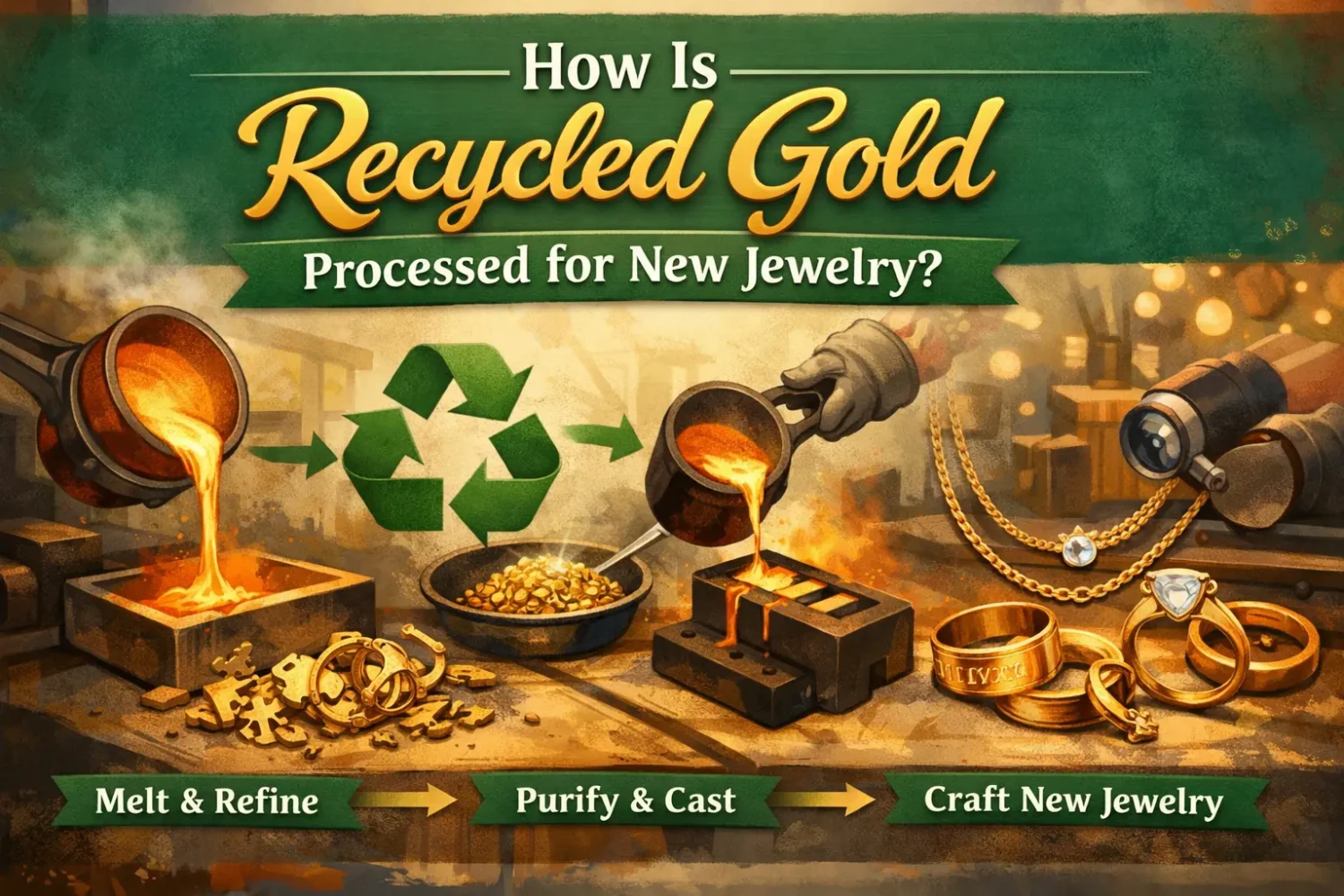
How Is Recycled Gold Processed for New Jewelry?
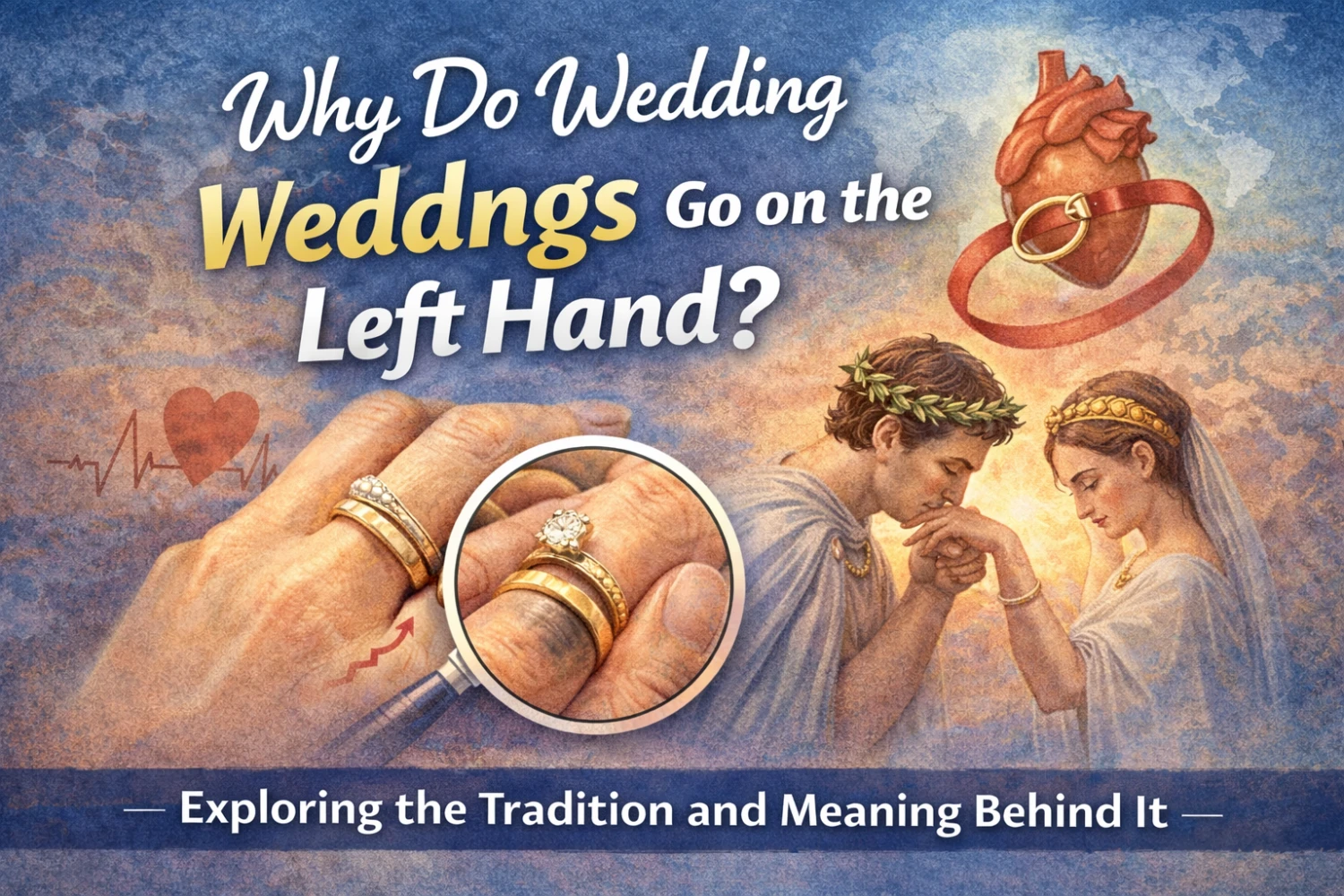
why do wedding rings go on left hand
Related products

14K Yellow Gold pave Diamonds Band Ring Jewelry Bands Rings Manufacturer

925 Silver Natural Silver RH Band Ring Jewelry Bands Rings Manufacturer

14K Yellow Gold Malachite Engraved Ring Jewelry Manufacturer

14K Yellow Gold Men's Ring Jewelry Manufacturer
925 Silver Gold Plated Men's Ring Jewelry Manufacturer


Private Lable 14K Yellow Gold Plated Pave Diamond & Rose Cut Ddiamond Ring Jewelry

Wholesale 925 Silver Yellow Gold Moissanite Round Ring Jewelry
Wholesale 14K Gold Moissanite Diamond Round Ring Jewelry

14K Gold Turkish Turquoise 5 Row Band Ring – Gemstone Link Cigar Band

Wholesale 14K Yellow Gold Moissanite Turquoise Enamel Band Ring

14K yellow Gold Yellow Sapphire Ring Jewelry Supplier

14K Yellow Gold Diamond Black CZ Band Connector Ring

14K Yellow Gold Malachite Red White CZ Ring Custom Jewelry

14k Rose Gold Malachite And Lapiz Lazuli White CZ Ring Manufacturer

Private Label 14K Yellow Gold Moonstone CZ & Blue CZ Ring

Wholesale 9K Rose Gold Cubic Zircon Connected Ring Jewelry

Wholesale 925 Silver Yellow Gold Plated Cubic Zircon Connected Ring Jewelry
Private Label 925 Sterling Silver Yellow Gold Plated Moonstone CZ & Blue CZ Ring
Contact Us For Custom Jewelry
Please get in touch with us and share your ideas if you have personalized jewelry or are searching for a private label jewelry manufacturer. In accordance with your suggestions, we will make and present genuine jewelry.
Drop Us a Line
Scan QR Code
for immediate contact



Contacts
-
Address
FF-206, Kishanpole Bazar, Jaipur, Rajasthan
-
Phone / WhatsApp
+91 9216779317
-
Email
My Account
Subscribe to our newsletter for regular updates about Offers, Coupons & more
-
Address
FF-206, Kishanpole Bazar, Jaipur, Rajasthan
-
Phone
+91 9216779317
-
Email
-
For Order Related Query
Please get in touch with the above mentioned number on whatsapp only
-
Opening Hours
Monday to Sunday | 10:00 AM to 7:00 PM