

How Much Does a 14k Yellow Gold Persian Turquoise Cabochon Ring Cost?
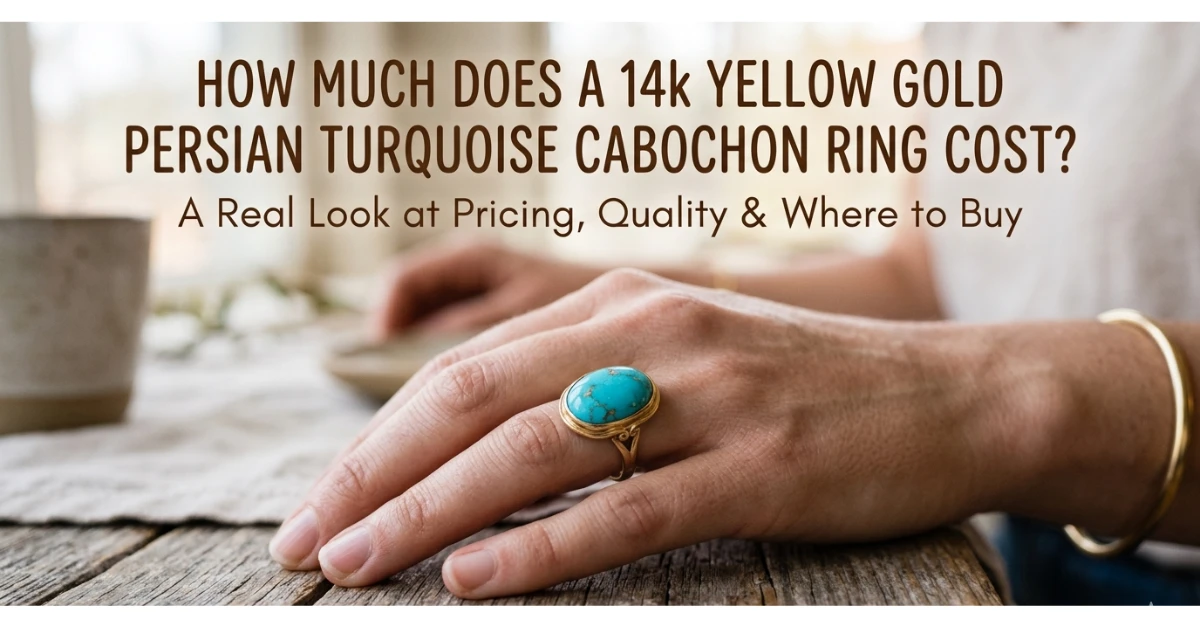
How Much Does a 14k Yellow Gold Persian Turquoise Cabochon Ring Cost?
If you've been searching for a 14k yellow gold Persian turquoise cabochon ring and found yourself confused by prices that range from $400 to nearly $10,000, you are not alone. The wide range is real and it exists for very specific, knowable reasons. This guide breaks down exactly what drives the price of these rings, what you should expect to pay for genuine quality, and how to make sure you're getting what you're actually paying for.
The Short Answer: What Do These Rings Cost in 2025?
Let's get the number on the table right away, because that's what you came for.
A genuine 14k yellow gold Persian turquoise cabochon ring new, handcrafted, set with a natural and untreated stone will typically cost between $750 and $1,800 in the current US market. The sweet spot for a beautifully made single-stone ring sits in the $850 to $1,200 range.
Here is a quick-reference price guide before we go deeper:
Now why does the price range span that much? That is the story worth understanding. And once you understand it, you will never overpay for a lesser stone or underpay for a fake.
What Is Persian Turquoise And Why Does "Persian" Matter for Price?
Not all turquoise is created equal. This is the single most important thing to understand before buying any turquoise ring, and it is the primary reason why the word "Persian" in the product name carries such weight and such a price premium.
The Geography of Quality
Turquoise is mined across the world: in the American Southwest (Nevada, Arizona, New Mexico), in Mexico, China, Tibet, and Australia. Each region produces turquoise with distinctive characteristics. And then there is Iran.
Persian turquoise comes from the mines around Nishapur, a city in the Khorasan region of northeastern Iran. These mines have been producing turquoise for over 2,000 years among the oldest continuously worked gemstone mines in human history. The Persian kings of antiquity adorned their thrones and crowns with Nishapur turquoise. The Blue Mosque in Tabriz gets its name from the turquoise tiles that cover its domes. Ottoman sultans imported Persian turquoise by the chest. For millennia, this region set the standard against which all other turquoise was measured.
Why is Nishapur turquoise special? Several reasons:
Color consistency
Persian turquoise is known for its vivid, even, robin's-egg to sky-blue color. Where lesser turquoise often shows uneven patches, fading at the edges, or muddy greenish undertones, fine Persian turquoise maintains a saturated, consistent blue across the entire stone. Gemologists describe the ideal color as "Persian blue" a term that has entered the language precisely because Nishapur defined the benchmark.
Natural hardness
Persian turquoise tends to have higher natural hardness and density than turquoise from most other sources. This matters enormously for durability and for treatment: harder turquoise does not need to be stabilized with resins to survive cutting and setting. A harder stone holds its color and polish longer.
Minimal matrix
Matrix refers to the veins of surrounding rock (usually iron or manganese) that appear as brown, black, or golden lines through the stone. While some buyers love a dramatic matrix pattern, the most prized Persian turquoise tends to have minimal, fine matrix or none at all a clean, unblemished field of pure blue.
Rarity
Persian turquoise production has been in decline for decades. Political dynamics in Iran, reduced mine output, and increasing global demand have all contributed to a tightening supply. Genuine, high-quality Persian turquoise is not as easy to find as it was twenty years ago. That scarcity is reflected in the price and it is why the price has been rising.
Why "Persian" Is Often Misused?
Here is the problem: "Persian" is not a regulated or certified designation. Any seller can call any turquoise "Persian" without legal consequence. This is why the price range for rings labeled "14k gold Persian turquoise" is so wide. Some sellers are selling the real thing. Others are applying the word loosely to American turquoise, Chinese turquoise, or even synthetic simulants.
Later in this guide, we will show you exactly how to tell the difference.
The 7 Factors That Determine the Cost of a 14k Gold Persian Turquoise Ring
Understanding price requires understanding the variables. Here are the seven factors that affect what a 14k yellow gold Persian turquoise cabochon ring costs and how each one moves the price up or down.
Factor 1: The Quality of the Turquoise Stone
This is the single biggest price driver, and it operates on several dimensions.
Color grade
The most valuable Persian turquoise is an intense, even, vivid sky blue sometimes described as "swimming pool blue" or "robin's egg blue." As the color becomes less saturated, more greenish, or less consistent across the stone, the value drops. A top-color Persian turquoise stone can cost three to five times more per carat than a mid-grade stone, and that difference is fully reflected in the ring price.
Clarity and surface quality
Fine Persian turquoise has a smooth, even surface with no cracks, pits, or inclusions. Surface flaws that escape the cutting process reduce the stone's value significantly.
Carat weight and stone size
Larger turquoise stones are rarer and cost proportionally more. A 15x11mm oval cabochon (roughly 8–10 carats) will cost significantly more in material than a 10x8mm stone. You will notice that many cheaper rings feature smaller stones this is how sellers reduce material cost while still using the word "turquoise" in the listing.
Matrix pattern
This is somewhat subjective, but generally: a fine, even, spider-web matrix pattern in Persian turquoise is considered premium. Coarse, irregular, or heavy matrix reduces the stone's value. Completely matrix-free ("clean") stones command the very highest prices.
Factor 2: Treatment Status Natural, Stabilized, or Enhanced
This is the factor most buyers overlook and most sellers obscure. It is crucial.
Natural (untreated) turquoise has had nothing done to it beyond cutting and polishing. Its color is exactly as the earth produced it. This is the most valuable category and the most rare.
Stabilized turquoise has been impregnated with a colorless resin or polymer under pressure to harden a soft or porous stone and improve its durability. Stabilization is extremely common in commercial jewelry it is not inherently dishonest, but a stabilized stone is worth considerably less than a natural one. Approximately 90% of turquoise sold in commercial jewelry in the US is stabilized.
Treated or dyed turquoise has had color applied artificially to enhance or standardize its appearance. This is the lowest grade. An untrained eye cannot distinguish treated from natural turquoise without laboratory testing which is exactly why unscrupulous sellers use treated stones at natural-stone prices.
The price impact: A natural, untreated Persian turquoise stone can cost 5 to 10 times more per carat than a stabilized stone of similar size and color. When you pay $950 for a ring with natural Persian turquoise versus $300 for one with treated turquoise, the price difference is real the stone difference is also real.
At Suren Jewels, every turquoise we use is natural and untreated. We document this and provide treatment status on request.
Factor 3: The Gold Weight, Purity, and Craftsmanship
Fourteen karat gold means the metal is 58.5% pure gold, alloyed with other metals (typically copper and silver) for strength and color. In a ring, the gold weight typically ranges from about 3 grams to 8 grams depending on the band style, shank width, and setting construction.
At approximately $60–$80 per gram for 14k gold (fluctuating with gold market prices), the gold alone in a modest ring represents $180 to $640 in material cost before any labor or design cost is factored in.
Craftsmanship adds to this
A ring with open filigree work, hand-engraved shoulders, or a hand-fabricated bezel versus a simple cast band involves significantly more labor. A cast ring (poured in a mold) can be produced faster and cheaper than a hand-fabricated one. Both can be beautiful, but hand-fabricated settings justify higher prices.
Plated vs. solid gold
Some rings marketed as "gold" are in fact gold-plated sterling silver or gold-filled metal. These are not the same as solid 14k gold. Always look for the 14k hallmark stamp inside the band. A ring that is not stamped 14k is not 14k, regardless of what the listing says.
Factor 4: The Setting Style
How the stone is set into the gold significantly affects both the price and the character of the ring.
Bezel setting:
The stone is surrounded by a continuous rim of gold that holds it in place. Bezel settings are elegant, protective, and require skilled craftsmanship to execute well. They tend to add more gold weight and labor cost.
Prong setting:
Four or six claws of gold grip the stone at its sides, allowing maximum light to reach the stone from the sides. Prong settings showcase the stone beautifully and require precise handwork to ensure even tension.
Flush or channel setting:
The stone sits level with the gold surface. Less common for cabochons.
Victorian or antique-style settings:
Open undergalleries, pierced shoulders, and decorative gallery work add labor and design complexity and justify higher price points. These are often the most beautiful settings and the most coveted.
Factor 5: Stone Count and Ring Design
A single Persian turquoise cabochon is the classic presentation one large, breathtaking stone commanding the full attention of the eye. Three-stone rings (a larger center flanked by two smaller matched stones) are also a distinguished design with a Victorian pedigree. More stones mean more material cost, more setting labor, and more design complexity.
Rings with diamond accents small round brilliant-cut diamonds flanking the turquoise or pave-set into the band occupy the higher end of the price range. The diamonds add sparkle, contrast, and significant material cost. A ring with, say, a 0.25 ctw of SI-clarity diamonds will add $200–$500 to the price versus a plain gold setting.
Factor 6: Who Made It and Where
A ring made by a skilled independent jeweler or a specialist gemstone jewelry brand commands a premium over a mass-market piece or a marketplace reseller listing. This premium is justified for several reasons: traceability, quality control, return policies, and the ability to verify stone authenticity.
Designer or signed pieces a ring bearing a recognized designer's name or hallmark carry the most significant premium. A turquoise ring, for example, retails for thousands of dollars. You are paying for the stone, the gold, and the brand. Whether the brand premium is worth it to you is a personal decision.
At independent jewelers and specialty brands like Suren Jewels, you are paying for handcrafted quality, verified materials, and direct accountability without the designer brand markup.
Factor 7: Where You Buy It
The retail channel affects price in ways most buyers don't think about.
Brick-and-mortar jewelry stores have overhead costs rent, staff, utilities, display cases that are built into the price of everything they sell. A ring priced at $1,200 in a physical store might reflect $400 worth of actual material and craftsmanship plus $800 in retail overhead and margin.
eBay and marketplace sellers span the full quality spectrum. You can find genuine deals on pre-owned estate pieces, but you can also be sold treated or synthetic turquoise labeled as "Persian." The platform's buyer protection helps, but verification is on you.
Specialty online jewelers like Suren Jewels have lower overhead than physical stores and can offer better value but quality varies widely between brands. Buy from jewelers who are transparent about stone origin, treatment status, and return policies.
Etsy features a large handmade jewelry community. Quality ranges from exceptional to questionable, and "Persian turquoise" claims are not always verifiable. Always ask for documentation.
Price Breakdown by Category: New, Pre-Owned, Vintage, and Custom
Let's look at what each buying category typically delivers.
New, Handcrafted Rings : $750 to $1,800
This is the most straightforward category. You are buying a ring made from new materials, typically with a manufacturer's warranty or return policy. The stone should be accompanied by information about its origin and treatment status. This is where Suren Jewels operates. You know what you're getting, you know it hasn't been worn, and the quality has been verified before it ships.
Within this category, single-stone rings in plain 14k gold bands sit at the lower end ($750–$1,100). Three-stone rings and rings with decorative settings or diamond accents sit at $1,100–$1,800.
Pre-Owned and Estate Pieces : $350 to $1,000+
Pre-owned rings can offer excellent value, particularly for buyers who love vintage jewelry. An estate piece that was made fifty years ago with genuine Persian turquoise when those stones were more plentiful and cheaper can be a remarkable find at a fair price.
The risks: you often cannot verify stone treatment on a vintage piece without laboratory testing. The ring may have condition issues (sizing, prong wear, stone chips) that require repair costs. And the "Persian" claim is even harder to verify on an old estate piece than on a new one.
If you're buying pre-owned, insist on a return policy and have the ring evaluated by an independent jeweler before committing.
Custom-Made Rings : $1,200 to $3,000+
If you want a ring designed specifically for you a particular stone shape, a unique setting style, a specific weight or width custom is the path. You are paying for design consultation, custom pattern making, hand fabrication, and individual attention. The result is a piece that exists nowhere else in the world.
Custom turquoise rings take typically four to eight weeks and require an initial deposit. They are an excellent choice for buyers with specific visions, collectors seeking a particular stone, or anyone commemorating a significant occasion.
Designer and Signed Pieces : $2,000 to $10,000+
Name-brand pieces command premium prices, often far beyond what the materials and craftsmanship alone would justify. For some buyers, the brand is the point. For others, the same quality at a fraction of the price from an independent jeweler represents far better value.
What the Market Is Selling Right Now And What It Reveals?
A scan of the current market for 14k yellow gold Persian turquoise cabochon rings reveals some instructive patterns.
On eBay, new listings show prices from $400 for pre-owned cocktail-style rings up to $1,799 for new pieces featuring a 15x11mm oval Persian turquoise with diamond accents. The seller at $1,799 is a verified dealer with 1,500+ positive reviews and specifies the stone as "natural, not treated" those two data points justify the premium. The $400 piece is pre-owned with no returns accepted a significant risk flag.
At independent fine jewelers, the range is $795 to $1,620 for comparable pieces. Aurum Jewelers in Buffalo lists pieces at $795–$895 with specific mention of "finest quality" natural matched stones. Sindur Fine & Antique Jewelry in Ohio lists at $950 and $1,620. These are credible price points for what they describe.
What this market scan tells us:
$750–$1,200 is the rational price range for a well-made, new, single-stone 14k yellow gold ring with a genuine natural Persian turquoise cabochon. Prices below this range should prompt verification. Prices above it should be justified by additional features (diamonds, three stones, designer name) or exceptional stone quality.
Anything under $500 for a "new" ring with "Persian" turquoise in "14k gold" deserves skepticism. The material costs alone gold plus a quality stone make very low prices nearly impossible to sustain without cutting corners somewhere: the stone quality, the gold purity, or the "Persian" claim.
Treated vs. Untreated Turquoise: The Hidden Price Trap
This section is the most important one in this article for anyone about to spend real money on a turquoise ring.
The turquoise market has a treatment problem. It is widespread, poorly disclosed, and directly relevant to price. Here is what you need to know.
The Treatment Spectrum
Natural turquoise is exactly as the earth produced it. It has been cut and polished and nothing else. This is the gold standard literally and figuratively. It is rare, beautiful, and valuable.
Wax or oil treated turquoise has had a thin coating of wax or oil applied to the surface to enhance luster and temporarily improve color. This is a minor treatment that jewelers have used for centuries and that many in the trade consider acceptable. The effect fades over time.
Stabilized turquoise has been impregnated with clear resin under vacuum and pressure to harden a porous stone and lock in its color. This is the most common treatment in commercial jewelry worldwide. There is nothing wrong with stabilized turquoise but it is worth a fraction of natural turquoise, and you should pay stabilized prices for it, not natural prices.
Color-enhanced or dyed turquoise has had artificial color added. This is the lowest grade. Under magnification, dyed turquoise often shows color concentrated in the matrix veins a telltale sign. A UV lamp will sometimes reveal treatment. Laboratory testing can confirm it definitively.
Simulated or synthetic turquoise is not turquoise at all. Howlite dyed blue is frequently sold as turquoise by dishonest vendors. Plastic and glass simulants also exist. These have no value as gemstones.
How to Protect Yourself?
Ask directly: "Is this stone natural and untreated?" A trustworthy seller will answer clearly and, if asked, provide documentation. A seller who deflects, responds vaguely, or simply repeats "genuine turquoise" without addressing treatment should be treated with caution.
Look for independent laboratory certificates. The GIA (Gemological Institute of America) and other respected gem labs can certify turquoise as natural and untreated. For a ring priced at $1,000 or more, a certificate is a reasonable expectation.
Examine the stone under magnification if possible. Natural turquoise will show subtle variations in color distribution and natural surface texture. Dyed turquoise often shows color pooled in cracks and matrix veins. Synthetic material often looks too perfect too uniform, too consistent.
Buy from sellers with explicit treatment disclosure policies and clear return policies. A seller who will not accept returns is telling you something.
How to Evaluate Whether a Ring Is Worth Its Price Tag?
Here is a practical checklist for evaluating any 14k yellow gold Persian turquoise ring before you buy:
Stone questions to ask:
Is the turquoise natural and untreated? (Get this in writing)
Can you provide documentation of stone origin?
What is the stone's approximate weight in carats?
Are there any treatments, stabilization, or enhancements?
Is the stone from Iran (Persian) specifically or is it labeled "Persian" generically?
Metal questions to ask:
Is the gold solid 14k not plated, not filled?
Is the ring hallmarked 14k inside the band?
What is the approximate gold weight in grams?
Craftsmanship questions to ask:
Is the ring handcrafted or cast from a mold?
Where is the ring made?
Is the setting secure with no loose prongs?
Purchase protection questions:
What is the return policy?
Is there a warranty on the ring?
Can I have the ring independently appraised after purchase?
Does the ring come with a certificate or documentation?
A seller who answers all of these questions clearly and confidently, with documentation available, is almost certainly selling exactly what they say they are. A seller who deflects, hedges, or gets defensive is a seller to avoid.
Is a Persian Turquoise Ring a Good Investment?
This is a question we hear more and more as buyers become sophisticated about gemstones as assets as well as adornments. The answer is nuanced but genuinely positive.
The Supply Story
Persian turquoise production has been declining for decades. The ancient mines around Nishapur are not inexhaustible, and political dynamics in Iran have made international trade complex. The result is that the supply of genuinely fine, natural, untreated Persian turquoise entering the global market has been tightening.
At the same time, demand has been rising driven by growing global interest in natural gemstones, a cultural shift toward authentic and handcrafted jewelry, and the recognition by estate jewelry collectors that vintage turquoise pieces hold their value exceptionally well.
The Price History
Estate turquoise jewelry from the 1970s pieces that sold for a few hundred dollars at the time now regularly sells for $1,000 to $5,000 at auction, depending on quality and maker. The trajectory for fine Persian turquoise has been consistently upward over a long time horizon.
Fine natural turquoise has outperformed many other colored gemstones over the past twenty years as a category. Rubies and Kashmir sapphires occupy a different tier, but within the "collectible gemstone" space, Persian turquoise has a strong track record.
The Caveat
Not all turquoise appreciates. Stabilized or treated turquoise does not have the same track record. The investment thesis applies specifically to natural, untreated Persian turquoise in quality gold settings not to commercial jewelry-grade material.
And of course, jewelry should be purchased first and foremost for its beauty, its meaning, and the joy it brings. The investment upside is a bonus, not the reason. But for buyers who want both a beautiful ring and a piece that holds its value, natural Persian turquoise in 14k gold is a genuinely sound choice.
What Makes Suren Jewels' Persian Turquoise Rings Different?
We want to be direct with you about who we are and why we believe our rings represent excellent value.
We use only natural, untreated Persian turquoise
This is not a marketing phrase it is our sourcing standard, documented and verifiable. The color you see in our stones is the color the earth created. We do not stabilize, treat, or enhance our turquoise.
Our gold is solid 14k, always
Every ring is hallmarked and can be independently tested. We do not plate or fill. The gold weight and purity are what we say they are.
Our rings are handcrafted
We work with skilled artisans who treat each ring as an individual piece, not a production unit. The result is jewelry with the slight, beautiful variations that only come from human hands.
We are transparent about everything
Stone origin, treatment status, gold weight, sizing options, return policy we answer every question directly because we have nothing to hide.
We offer free ring sizing across sizes 5–10, with custom sizing available beyond that range at no additional charge.
We offer free US shipping on every order, with premium gift-ready packaging included.
Our return policy is 30 days, no questions asked
We stand behind every piece we sell because we know what went into making it.
We price our rings to reflect genuine quality, not inflated retail markup, not the convenience fees of a marketplace, not the premium of a designer name. When you buy from Suren Jewels, you pay for the stone, the gold, and the craft. That is all.
Final Verdict: What Should You Actually Pay?
Here is our honest, straightforward answer based on everything covered in this guide.
For a genuine, new, handcrafted 14k yellow gold ring set with a natural, untreated Persian turquoise cabochon, you should expect to pay between $850 and $1,200 for a single-stone design. Three-stone rings and designs with decorative settings or diamond accents will run $1,200 to $1,800.
If you see a new ring advertised as "14k gold Persian turquoise" for under $500, treat it with significant skepticism. Verify the stone treatment status, verify the gold purity, and verify the return policy before purchasing.
If you see a designer-labeled ring for $3,000–$10,000 with similar materials, you are paying a brand premium. Whether that premium is worth it to you is personal but know that you can get the same quality of stone and gold from independent jewelers at a fraction of the price.
The middle ground roughly $850 to $1,500 from a reputable independent jeweler with transparent sourcing and a clear return policy is where you get the best combination of quality, value, and confidence.
That is where Suren Jewels lives. And it is why our customers keep coming back.
Frequently Asked Questions
How can I tell if Persian turquoise is real?
Look for even color distribution throughout the stone, not concentrated in veins or cracks (which suggests dye). Ask the seller for written confirmation of natural, untreated status. For high-value purchases, request a laboratory certificate from GIA or another recognized gem laboratory. Buy from sellers with clear return policies so you can have the piece independently assessed after purchase.
Why does the same ring cost $400 on eBay and $1,200 at a jeweler?
Several possible reasons: the eBay piece may be pre-owned; the turquoise may be treated or lower grade; the gold may be lighter or the setting simpler; or the seller may have no overhead and accept thin margins. In some cases you find a genuine deal; in others, the low price reflects lower quality materials. Always verify before buying.
Is 14k or 18k gold better for a turquoise ring?
Both are excellent choices. 14k gold is more durable than 18k (because it has a higher alloy content) and is the standard for everyday-wear rings in the US. 18k has a richer, more saturated gold color and higher precious metal content hence the higher price. For a ring you plan to wear regularly, 14k is often the more practical choice.
What ring size should I order?
The most common women's ring sizes in the US range from 5 to 8, with size 7 being the average. If you are unsure of your size, visit a local jeweler for a professional measurement, or use a printable ring sizer. At Suren Jewels, we offer free sizing so you can order and have the ring adjusted to fit perfectly before it ships.
Can Persian turquoise fade over time?
Natural, untreated turquoise can develop a slight patina or color shift over decades if exposed to oils, sunlight, or chemicals a process sometimes called "turquoise aging." Many collectors actually prize this gentle evolution in the stone's character. To preserve the original color, keep the ring away from prolonged sunlight, perfumes, lotions, and chemicals, and store it in a soft pouch when not wearing it.
What is the difference between a cabochon and a faceted gemstone?
A cabochon is cut and polished into a smooth, domed shape without flat facets. A faceted stone has angled flat cuts that create light refraction and sparkle. Turquoise is almost always presented as a cabochon because the dome showcases the stone's natural color and texture and because turquoise is opaque, meaning facets would create no additional sparkle as they would in a transparent stone like a diamond or sapphire.
Does turquoise chip or crack easily?
Turquoise has a Mohs hardness of about 5–6, which is lower than sapphire (9) or diamond (10) but comparable to glass. It can chip if struck sharply against a hard surface. A bezel or prong setting protects the stone's edges. The ring should be removed before activities that involve impact risk construction work, heavy sports, gardening. With normal wear and basic care, a well-set turquoise ring will last for generations.
Is this a good ring for everyday wear?
Yes, with mindful care. Many of our customers wear their Persian turquoise rings daily for years without issue. Remove the ring before swimming, bathing, applying cosmetics, or cleaning with chemicals. Wipe it gently with a soft cloth periodically. Have it professionally checked once a year to ensure the prongs are secure. That level of care is all it takes to keep the ring beautiful for a lifetime.
At Suren Jewels, we believe that fine jewelry should come with complete transparency about the materials, the craftsmanship, and the price. If you have questions about any piece in our collection, our team is available to answer them personally. Browse our 14k yellow gold turquoise cabochon ring collection, and feel confident that what you see is exactly what you'll receive.
Recent Posts
Gold Chain Manufacturers You Can Trust Suren Jewels
9K Gold Jewelry Manufacturer for US Brands
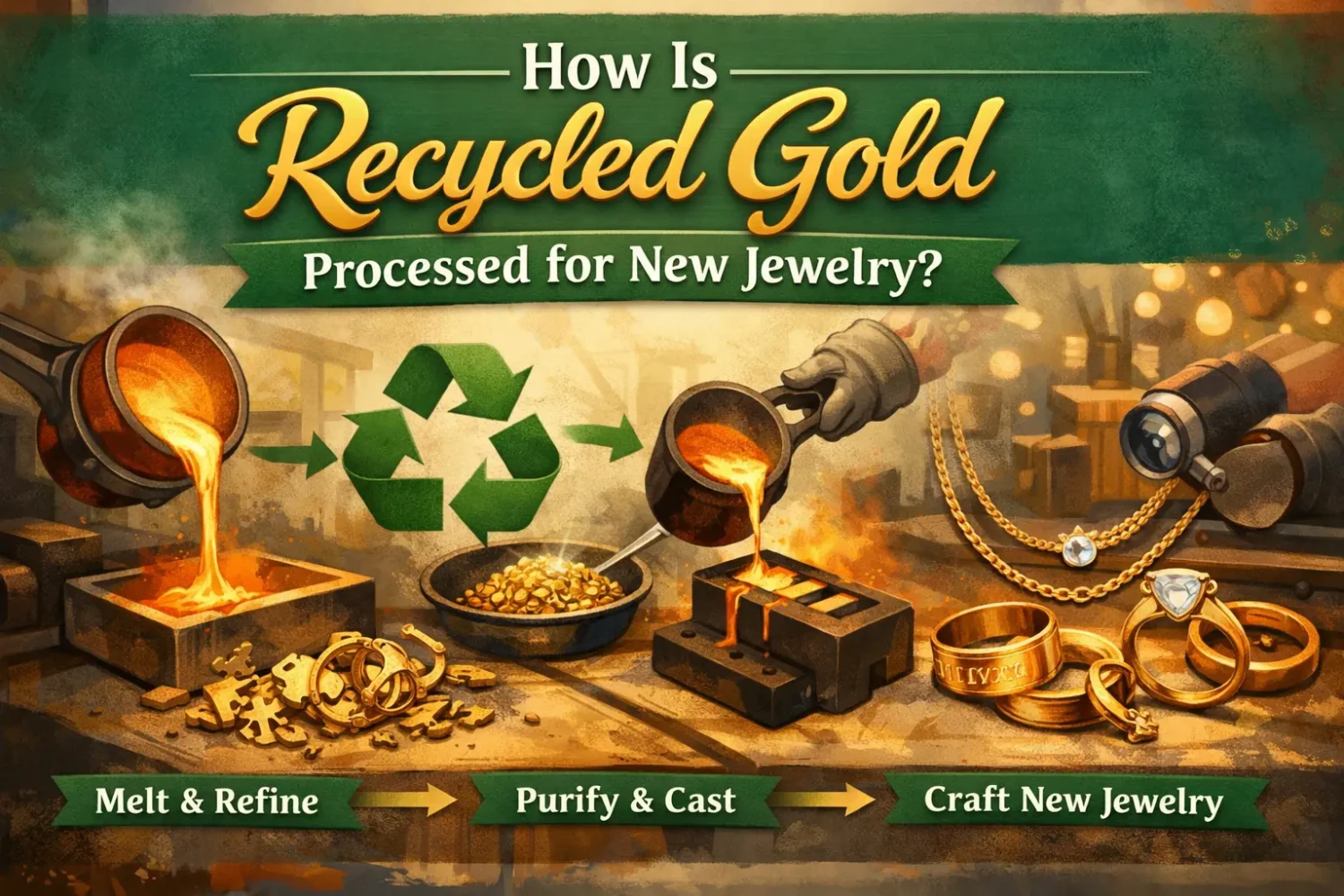
How Is Recycled Gold Processed for New Jewelry?
why do wedding rings go on left hand
Related products

14K Yellow Gold Lapiz Lazuli And White CZ Fish Pendant

925 Sterling Silver Yellow Gold Plated Lapiz Lazuli And White CZ Fish Pendant

14K Yellow Gold Yellow Quartz & Black Cubic Zircon Fish Pendant
Silver Yellow Gold Plated Yellow Quartz & Black Cubic Zircon Fish Pendant

14K Yellow Gold Clear Quartz & Ruby Cubic Zircon Fish Pendant
925 Silver Yellow Gold Plated Clear Quartz & Ruby Cubic Zircon Fish Pendant

14K Gold Hand-Carved Gemstone Snail Pendant – Designer Lucky Snail Charm for Necklaces
Hand-Carved 925 Gold Gemstone Snail Pendant – Lucky Charm Design for Necklaces

14K Carved Gemstone Flower Pendant – Handcrafted Floral Charm for Necklaces

14k Gold Star & Gemstone Heart Pendant – Black Onyx & Lapis Charm for Women


White Agate Scallop Shell Gemstone Pendant – 14K Yellow Gold Charm for Necklaces
925 White Agate Scallop Shell Pendant – Gold & Silver Gemstone Charm Jewelry

14K Carved Gemstone Heart Pendant – Designer Multi-Stone Heart Jewelry for Wholesale
Contact Us For Custom Jewelry
Please get in touch with us and share your ideas if you have personalized jewelry or are searching for a private label jewelry manufacturer. In accordance with your suggestions, we will make and present genuine jewelry.
Drop Us a Line
Scan QR Code
for immediate contact



Contacts
-
Address
FF-206, Kishanpole Bazar, Jaipur, Rajasthan
-
Phone / WhatsApp
+91 9216779317
-
Email
My Account
Subscribe to our newsletter for regular updates about Offers, Coupons & more
-
Address
FF-206, Kishanpole Bazar, Jaipur, Rajasthan
-
Phone
+91 9216779317
-
Email
-
For Order Related Query
Please get in touch with the above mentioned number on whatsapp only
-
Opening Hours
Monday to Sunday | 10:00 AM to 7:00 PM